The Sleep Stack: Everything You Need for Deep, Restorative Sleep – Even on a Brutal Schedule
Sleep is not passive downtime. It is your body’s most intensive maintenance window. During deep NREM sleep, growth hormone surges – with peak secretion occurring before midnight, which is why your bedtime matters more than your total hours. During REM, the glymphatic system activates: a waste-clearance network that flushes amyloid plaques and metabolic byproducts from the brain. Matthew Walker, author of Why We Sleep, calls it “the dishwasher of the brain.” Miss it chronically, and cognitive decline accelerates measurably.
One bad night raises cortisol by up to 37% and impairs glucose metabolism. Two consecutive nights of six hours or less produce cognitive deficits equivalent to full sleep deprivation – while subjects report feeling “fine” (Van Dongen et al., Sleep, 2003).
For high performers, the problem isn’t willingness to sleep – it’s biology getting hijacked before you even get to bed.
The fix starts in the morning.
Get 5+ minutes of natural sunlight in your eyes within 60 minutes of waking. This sets your circadian timer and determines precisely when melatonin will rise that evening – the mechanism Andrew Huberman has detailed extensively. Cut caffeine by 1pm; with a half-life of 5–7 hours, a 3pm espresso still has measurable levels in your system at midnight.
Your alarm matters too. A hard alarm – sirens, loud tones – triggers an immediate cortisol spike before you’re even conscious. The Loftie alarm clock wakes you with a gradual sound sequence that keeps that cortisol curve clean from the start.
Evening is where most people lose.
Blue light (450–490nm wavelengths) suppresses melatonin by up to 50% (Gooley et al., JCEM, 2011). After sundown, switch to Bon Charge red light bulbs – they emit zero blue light and create an environment your brain can actually wind down in. If screens are unavoidable, Bon Charge blue-light-blocking glasses are the most effective solution I’ve tested. For ambiance that doubles as biology: beeswax candles produce a warm, low-kelvin light that is naturally melatonin-friendly – and unlike paraffin candles, they don’t release toxins into your sleep environment.
Start a deliberate wind-down 60 minutes before bed. This is not about relaxation – it’s a physiological signal to your nervous system to shift from sympathetic to parasympathetic mode. Blue lotus tea in the final 30 minutes of this window supports the transition: it has mild anxiolytic properties and has been used traditionally as a sleep and relaxation aid.
The supplement.
Thorne Magnesium Glycinate (300–400mg) 30 minutes before sleep. Magnesium activates the parasympathetic nervous system and modulates GABA receptors – the same system targeted by sleep medications, but without dependency or suppressed REM. Thorne’s formulation uses the glycinate form specifically, which has the highest absorption rate and the fewest digestive side effects of any magnesium variant.
Your environment.
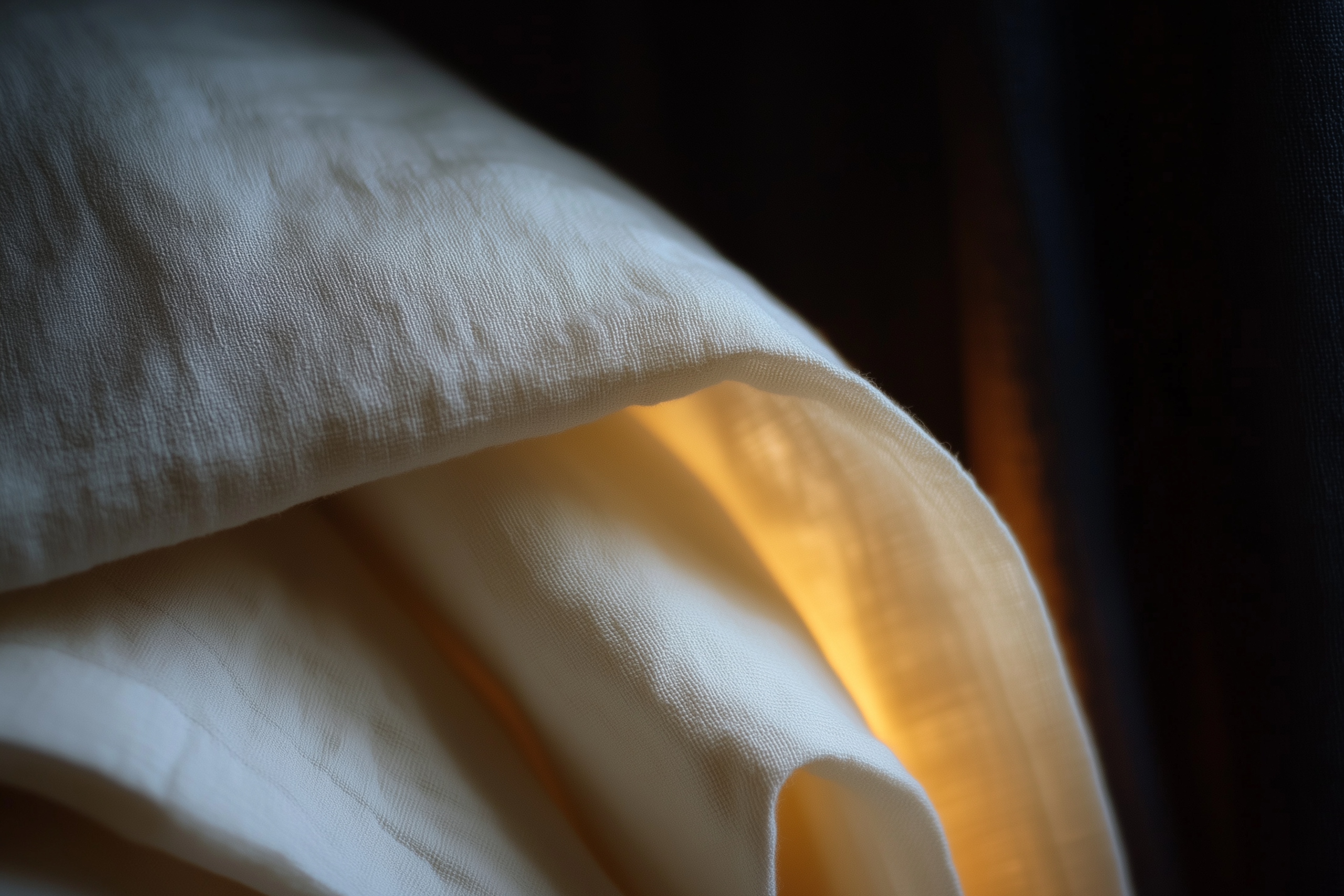
Cold (18–20°C / 65–68°F) and completely dark. Core body temperature must drop 1–2°F to initiate and sustain sleep. Heveya linen sheets are worth mentioning here – natural linen is temperature-regulating in a way synthetic fabrics aren’t, and it makes a measurable difference in how consistently your body stays in the right temperature range through the night.
Complete darkness means complete. Even small amounts of light through closed eyelids suppress melatonin. The Dore & Rose sleep mask is the best I’ve used – contoured so it doesn’t press on your eyes, with a silk surface that doesn’t disrupt skin overnight.
One addition most people haven’t tried: mouth tape. Nasal breathing during sleep increases nitric oxide production, improves oxygen delivery, and dramatically reduces the micro-arousals that fragment sleep architecture without you ever knowing. Start with a small piece across the center of your lips – not sealed shut.
Track it.
WHOOP gives you a nightly breakdown of sleep stages, HRV, and a recovery score that tells you exactly how last night’s sleep will affect today’s performance. Over weeks, patterns emerge that are impossible to identify by feel alone. You will learn things about your own sleep that will surprise you.
THE PROTOCOL
Everything in this post, condensed. Start here if you’re short on time.
Do this:
- Morning sunlight within 60 minutes of waking – 5 minutes minimum, outside, no sunglasses
- Last caffeine before 1pm
- Switch to Bon Charge red light bulbs or beeswax candles after sundown
- Room temperature 18–20°C / 65–68°F
- Complete darkness – Dore & Rose sleep mask if blackout curtains aren’t enough
- Try mouth tape – nasal breathing meaningfully improves sleep architecture
Take this:
- Magnesium Glycinate – 300–400mg, 30 minutes before sleep
- Blue lotus tea in the final 30 minutes of your wind-down
Invest in this:
- Bon Charge blue light blocking glasses if screens are unavoidable 60-minute wind-down before bed – same routine every night
- Loftie alarm clock – a clean cortisol curve starts the moment you wake up
- WHOOP – sleep stage tracking, HRV, recovery score. The data will change how you make decisions
- Heveya linen sheets to help regulate the temperature passively
Nothing on this page is medical advice. Always consult a qualified healthcare provider before changing your supplement or health protocols.